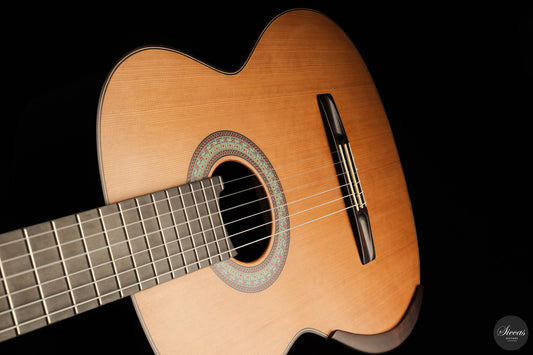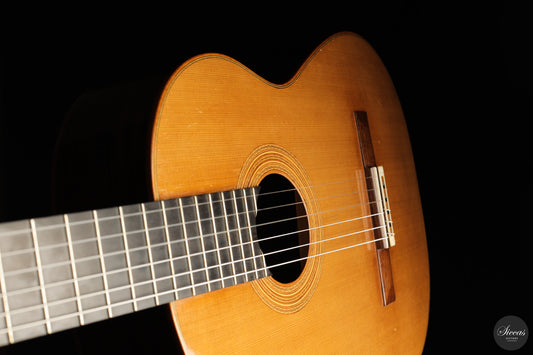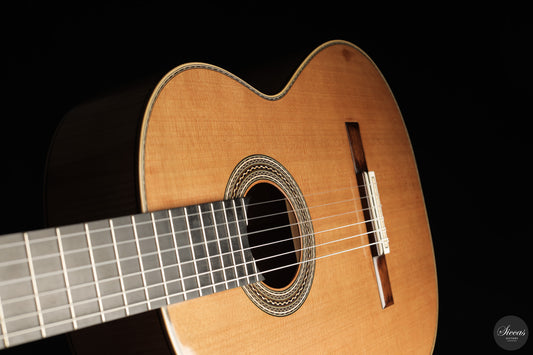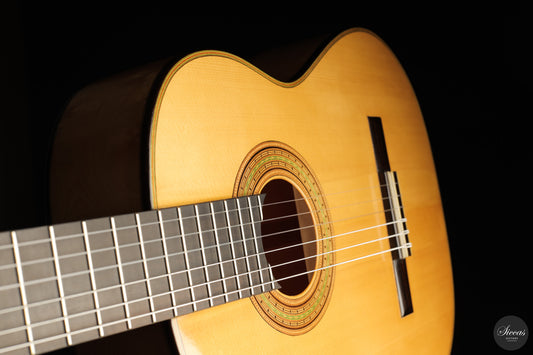

"How much does a classical guitar cost?" is a bit like asking how much a car costs: the honest answer is "it depends." Classical guitars span an enormous range, from inexpensive student models to master-built concert instruments worth as much as a small house. What matters is understanding what you actually get at each level — so you can spend wisely for where you are as a player.
The price tiers, explained
Rather than quote exact figures (which shift over time and by region), it helps to think in tiers, each defined by how the guitar is made and what it can do.
1. Beginner / student guitars
The entry level. These are usually factory-made, often with laminated (plywood) back and sides and sometimes a laminated top. The goal is an affordable, playable instrument to learn on. A well-set-up student guitar is perfectly fine for the first years; the key is good playability rather than fine materials. (See our guide to the best classical guitar for beginners.)
2. Intermediate / "student-plus" guitars
A step up brings a solid top (usually cedar or spruce), better woods, cleaner construction and a more refined sound. This is where many committed amateurs settle — an instrument that sounds genuinely good and won't hold back your development for a long time.
3. Advanced / "studio" guitars
Here you find all-solid-wood construction and, increasingly, partly handmade instruments — sometimes called "studio" guitars. They offer much of the tone and response of a high-end instrument at a more accessible price, often by combining skilled workshop production with fine materials. A great choice for serious students, teachers and performing amateurs.
4. Master / concert guitars
At the top sit guitars built entirely by hand by a single master luthier (or a small workshop under their name). These are the instruments of professional concert artists — makers in the tradition of Hauser, Friederich or Redgate. You are paying for hundreds of hours of expert handwork, the finest aged tonewoods, and a level of tone, projection and responsiveness that the lower tiers cannot match. Prices here climb steeply, and rare vintage instruments by legendary makers reach the highest levels of all.
What actually drives the price
- How it's made — factory vs workshop vs fully handmade by a master.
- Materials — laminated vs solid woods, and the quality and age of those woods.
- The maker's reputation — a renowned name commands more, and may hold its value.
- New vs vintage — a fine vintage instrument can cost as much as, or more than, a new master guitar.
How to spend wisely
Match the guitar to your level and commitment. There is little point in a master guitar for a first-year student, and equally little in a struggling beginner instrument for a serious player. Buy the best-playing guitar you can comfortably afford for where you are now — and remember that a proper setup, good strings and a humidifier are small costs that dramatically improve any instrument.
FAQ
Why are classical guitars so expensive at the top end?
Master guitars involve hundreds of hours of skilled handwork and the finest aged tonewoods, producing tone and responsiveness factory instruments can't match.
Do I need an expensive guitar to learn?
No — a well-set-up beginner or intermediate guitar is ideal for learning. Playability matters more than price early on.
Is a guitar a good investment?
Fine instruments by celebrated makers can hold value, but you should buy mainly for sound and playability, not as an investment.