How to Play Classical Guitar — A Beginner's Tutorial with Alexandra Whittingham

How to Play Classical Guitar — A Beginner's Tutorial with Alexandra Whittingham

If you are starting the classical guitar, the fastest way to build good habits is to learn the foundations correctly from day one. In this tutorial filmed at Siccas Guitars, the acclaimed guitarist Alexandra Whittingham teaches the essentials of how to play. The full lesson is below; this guide summarises what it covers so you can follow along and revisit each step.

Sitting and holding the guitar

Everything begins with posture. The classical guitar is traditionally played seated, with the instrument supported on the raised left leg (using a footstool or a support cushion) so the neck angles upward and both hands are free. Sit tall and relaxed; the guitar should be stable without you gripping it. Good posture prevents tension and makes every later step easier.

The right hand: where the tone lives

The right hand plucks the strings, and it is where your sound is made. The thumb (p) plays the bass strings; the index, middle and ring fingers (i, m, a) play the trebles. Aim for a relaxed hand with the fingers approaching the strings so that flesh and nail meet together for a warm, clear tone. (For the detail, see our guides to the right-hand position and nails.)

The left hand: clean notes with ease

The left hand presses the strings against the frets. Place the fingertips just behind the fret, press only as hard as needed for a clean note, and keep the thumb relaxed behind the neck. The goal from the very start is efficiency and relaxation, not force. Our guide to left-hand technique goes deeper.

First sounds and first pieces

Begin with single open strings to get a feel for tone, then simple scales and a first easy piece. Approachable starting repertoire includes Pachelbel's Canon in D and Satie's Gymnopédie No. 1. Learning to read standard notation early will open the whole repertoire to you.

The full series

The lesson above is the complete tutorial; Whittingham also released it as a three-part series covering posture, the hands and first playing in turn. Work through it slowly, a little each day, and prioritise relaxed, even playing over speed.

What you need to start

A well-set-up, properly sized classical guitar with nylon strings makes learning far easier. If you are still choosing one, read our guide to the best classical guitar for beginners.

FAQ

How should a beginner hold a classical guitar?

Seated, with the guitar on the raised left leg (footstool or support), sitting tall and relaxed so both hands are free and the neck angles up.

What should I learn first on classical guitar?

Posture and relaxed right- and left-hand technique, then open strings, simple scales and an easy first piece like Canon in D.

Do I need to read music?

For the classical repertoire, yes — learning standard notation early opens the whole repertoire. Tab can help alongside it.

More technique guides → · Browse our classical guitars

The Library
  • Classical Guitars

    The classical guitar, with its soft nylon strings and characteristic timbre, has become a symbol of chamber music, Spanish tradition, and concert repertoire. Its modern form was shaped by Antonio de Torres in the 19th century, setting the standard for the body, fan bracing, and the 65-centimeter scale length that are still used today. Instruments in this category open up a rich palette from the refined Romantic miniatures of Tárrega to the majestic concertos of Rodrigo. Here you will find guitars that preserve historical continuity and at the same time inspire new interpretations.
    Explore all classical guitars
  • Luthier: Vicente Carrillo
    Construction Year: 2026
    Construction Type: Double-Top Guitars
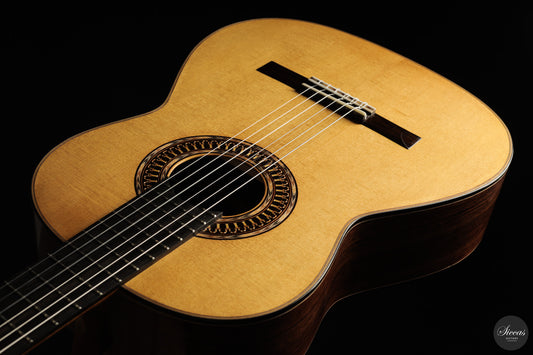
    Top: Spruce
    Back and Sides: Madagascar rosewood
    Soundboard Finish: Nitrocellulose
    Body Finish: Nitrocellulose
    Air Body Frequency: G sharp / A
    Weight (g): 1670
    Tuner: Aparicio
    Condition: New
  • Luthier: Vicente Carrillo
    Construction Year: 2026
    Construction Type: Double-Top Guitars
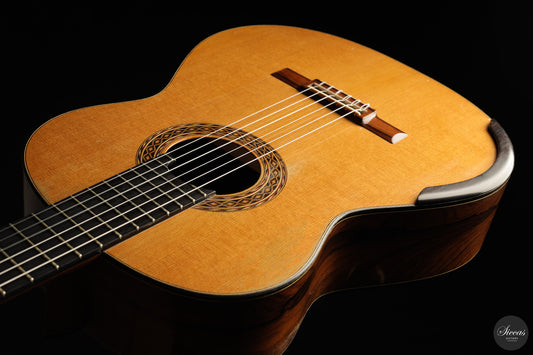
    Top: Cedar
    Back and Sides: Madagascar rosewood
    Soundboard Finish: Nitrocellulose
    Body Finish: Nitrocellulose
    Air Body Frequency: G sharp / A
    Weight (g): 1845
    Tuner: Aparicio
    Condition: New
  • Luthier: Gary Southwell
    Construction Year: 2008
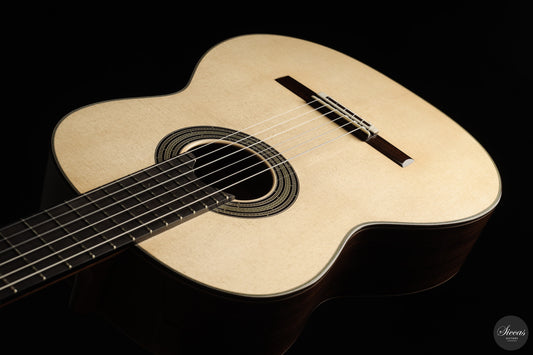
    Top: Spruce
    Back and Sides: Flamed Maple
    Soundboard Finish: French polish
    Body Finish: French polish
    Air Body Frequency: D / D sharp
    Weight (g): 1560
    Tuner: Rodgers
    Condition: Very good
  • Luthier: Vicente Carrillo
    Construction Year: 2026
    Construction Type: Double-Top Guitars
    Top: Spruce
    Back and Sides: Madagascar rosewood
    Soundboard Finish: Nitrocellulose
    Body Finish: Nitrocellulose
    Air Body Frequency: G sharp / A
    Weight (g): 1760
    Tuner: Aparicio
    Condition: New
  • Luthier: Vicente Carrillo
    Construction Year: 2026
    Construction Type: Double-Top Guitars
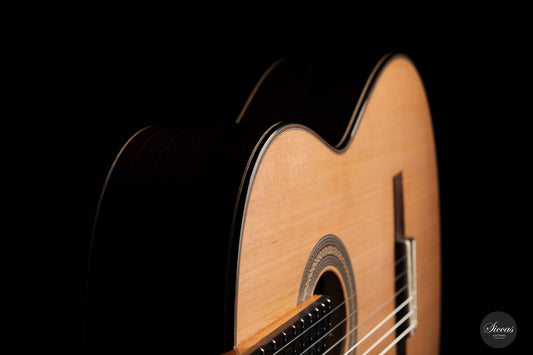
    Top: Cedar
    Back and Sides: Madagascar rosewood
    Soundboard Finish: Nitrocellulose
    Body Finish: Nitrocellulose
    Air Body Frequency: G sharp / A
    Weight (g): 1680
    Tuner: Aparicio
    Condition: New
  • Luthier: Gary Southwell
    Construction Year: 2024
    Construction Type: Traditional
    Top: Spruce
    Back and Sides: Indian rosewood
    Soundboard Finish: French polish
    Body Finish: French polish
    Air Body Frequency: E / F
    Weight (g): 1300
    Tuner: Rodgers
    Condition: Excellent

Discounts and Early Access

Subscribe to our weekkly Siccas Guitars newsletter for immediate access to subscriber-exclusive discounts and early bird specials.