Classical Guitar in the Digital Age
Something remarkable has happened to classical guitar over the past decade. An instrument with roots stretching back centuries — shaped by luthiers, refined by performers, passed down through conservatory tradition — has found an entirely new home online. Whether you want to learn classical guitar online, discover recordings you never knew existed, or connect with players on the other side of the world, the digital landscape has made all of this not just possible, but immediate.
This is not a story about technology replacing tradition. It is a story about the two growing together. The same guitar that Andrés Segovia championed in concert halls now reaches millions of listeners through streaming platforms and YouTube channels. The same techniques that once required access to a top-tier conservatory can now be studied at home, at your own pace, guided by some of the finest teachers alive. And the same community that once gathered only at festivals and competitions now meets daily, online, to share recordings, swap advice, and keep the repertoire alive.
Learning Classical Guitar Online: More Than Just Convenience
For many players, the internet has completely transformed what it means to study classical guitar. A generation ago, serious study meant geography: you needed to be close to a good teacher, or wealthy enough to travel to one. That barrier has not disappeared entirely, but it has been significantly lowered.
Online Lessons and Video Tutorials
Established concert guitarists now maintain YouTube channels and teaching platforms where they share everything from beginner fingering exercises to advanced interpretive choices. This kind of access was simply unthinkable before streaming video became widespread. You can watch a master guitarist break down a phrase from Recuerdos de la Alhambra in real time, pause, rewind, and watch again — as many times as you need.
Live online lessons via video call have added another layer. Many professional guitarists now teach students across continents, and what was once considered a compromise has, for many students, become a preferred format. The ability to record your own lessons, rewatch feedback, and integrate study into a flexible schedule has genuine advantages alongside the well-known limitations.
Interactive Apps and Real-Time Feedback
Apps designed for music learning have grown considerably more sophisticated. Tools that listen to your playing and offer real-time feedback on pitch, rhythm, and timing can be genuinely useful supplements to traditional practice — particularly for beginners working through foundational skills like tuning and basic technique. They are no substitute for a skilled teacher, but as a practice companion they fill a real gap.
Digital sheet music platforms have also changed how players access the repertoire. Scores that once required tracking down specialist publishers are now available instantly, often with playback options that help you hear how a piece is structured before you begin learning it. For someone exploring unfamiliar corners of the classical guitar repertoire, this is genuinely transformative.
Virtual Masterclasses
Perhaps the most significant development for serious students has been the rise of online masterclasses. During periods when live events were impossible, many leading performers moved their teaching online — and discovered that the format had unexpected strengths. A masterclass that might once have been attended by twenty students in a conservatory hall can now be watched live by thousands, with recordings available afterward to anyone who missed it.
This has opened up access to pedagogical approaches and interpretive traditions that were previously confined to specific institutions or national schools. A student in South America can now follow the teaching of a European guitarist with the same ease as someone in the same city.
Recording and Production: The Home Studio Revolution
Professional-quality recording used to require professional-level budgets. That has changed substantially. Accessible recording software, affordable microphones, and online tutorials covering acoustic treatment and signal chain have made it realistic for individual guitarists to produce recordings of genuine quality at home.
This matters for classical guitar in particular because so much of the instrument's character lives in subtle details: the breath between notes, the variation in tone colour between positions on the string, the way resonance builds in a well-made instrument. Capturing that well is a craft in itself, and the resources available online to learn that craft have expanded enormously.
Digital sheet music tools have also changed the composition and arrangement side of things. Notation software allows guitarists to write, edit, and share scores with far less friction than before. For those exploring the works of composers like Agustín Barrios or Francisco Tárrega, having editable scores available online makes it easier to adapt pieces to different keys or arrangements.
Streaming and Virtual Performance
Streaming platforms have done something interesting for classical guitar: they have made its catalogue genuinely browsable for the first time. A listener new to the instrument can follow an algorithm from one recording to another, discovering performers and pieces they might never have encountered otherwise. The depth of the classical guitar catalogue — spanning Renaissance lute transcriptions through twentieth-century masterworks to contemporary composition — is now accessible to anyone with a streaming subscription.
YouTube as a Concert Hall
YouTube occupies a unique position in the classical guitar world. It serves simultaneously as archive, performance space, teaching resource, and discovery engine. Performances that might otherwise exist only on out-of-print recordings are preserved and accessible. Young guitarists can build international audiences without the machinery of traditional record labels and concert touring. And listeners anywhere in the world can follow the careers of players like Ana Vidovic or David Russell in real time.
For the instrument itself, this visibility matters. Classical guitar is not a mainstream instrument in the way that piano or violin are, and every platform that brings it to new ears helps sustain the ecosystem of players, teachers, luthiers, and listeners that keeps it alive.
Live Streaming and Online Concerts
Live streaming has become a permanent part of the concert landscape, not merely a pandemic-era workaround. Many guitarists now treat online concerts as a distinct format rather than a lesser substitute for live performance — one with its own possibilities around camera angles, spoken introductions, and direct audience interaction via chat. For players based outside major cultural centres, streaming provides access to audiences that touring alone could never reach.
Social Media and the Global Classical Guitar Community
Classical guitar has always had a strong community dimension — festivals, competitions, guitar societies, and the culture of sharing recordings and scores among enthusiasts. Social media has amplified and accelerated all of this.
YouTube Channels and Content Creation
Beyond performances, YouTube has become home to a rich ecosystem of content around classical guitar: gear discussions, technique breakdowns, luthier profiles, historical context, and beginner guides. Channels run by enthusiasts and professionals alike have built substantial audiences around topics that would struggle to find space in mainstream music media.
Online Forums and Communities
Online forums dedicated to classical guitar have been active for decades, and while the landscape has shifted from dedicated forum software toward platforms like Reddit and Facebook groups, the culture of detailed, knowledgeable discussion has persisted. Questions about spruce versus cedar tops, fingernail care, repertoire choices, and instrument selection attract considered responses from experienced players willing to share what they know.
For someone starting out — working through beginner pieces or wondering how long it takes to learn classical guitar — these communities offer something that no app can fully replicate: the experience and encouragement of people who have been where you are.
Instagram, TikTok, and Short-Form Content
Short-form video has introduced classical guitar to audiences who would never have sought it out deliberately. A beautifully filmed thirty-second clip of a guitarist playing a passage from La Catedral or Capricho Árabe can reach millions of people who did not know they were interested in classical guitar. This kind of ambient discovery — stumbling across something beautiful while scrolling — has become one of the instrument's most effective recruitment mechanisms.
The Instrument Still Comes First
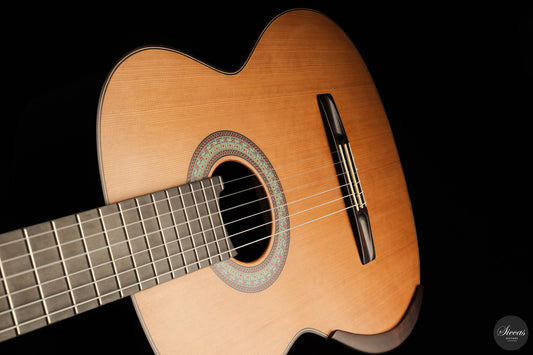
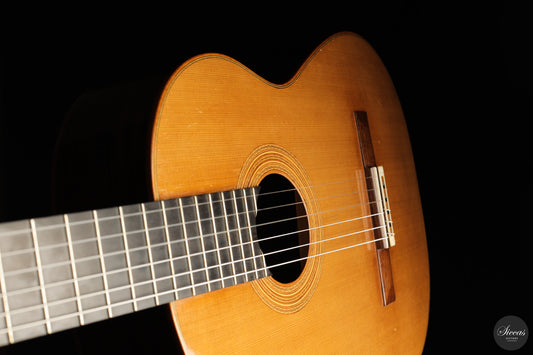
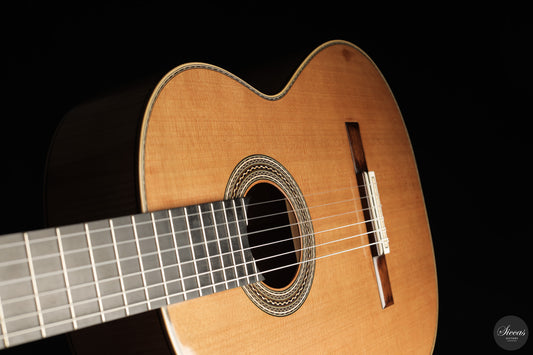
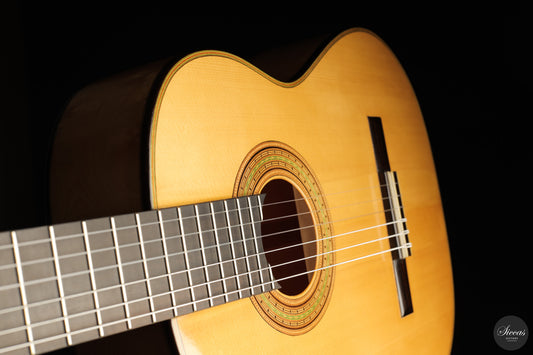
All of this digital activity circles back to one thing: the sound of a great classical guitar played well. No streaming platform or social media algorithm changes what makes a classical guitar extraordinary — the resonance of spruce or cedar, the responsiveness of the top, the craftsmanship of the luthier, the hours of practice that produce real technique.
If you are exploring classical guitars for the first time, or looking to upgrade to an instrument that will genuinely reward your developing skills, the digital landscape offers more resources than ever to guide that decision. You can hear recordings of instruments from specific makers, watch videos discussing construction choices, and read detailed comparisons before you ever touch a guitar.
Explore our range of classical guitars, including double-top guitars and instruments with spruce or cedar tops, to find the instrument that suits where you are in your playing — and where you want to go.