

Spruce
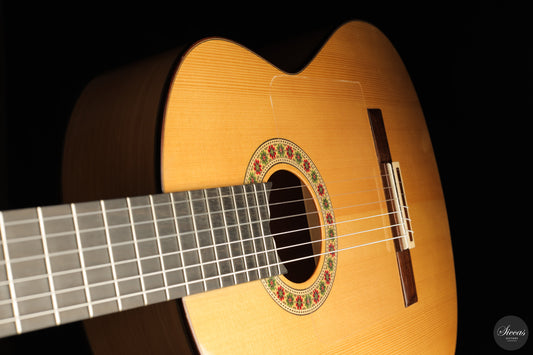
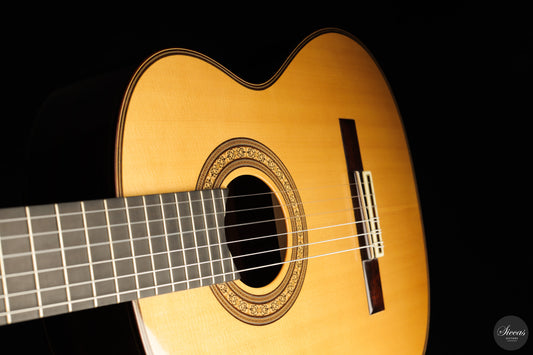
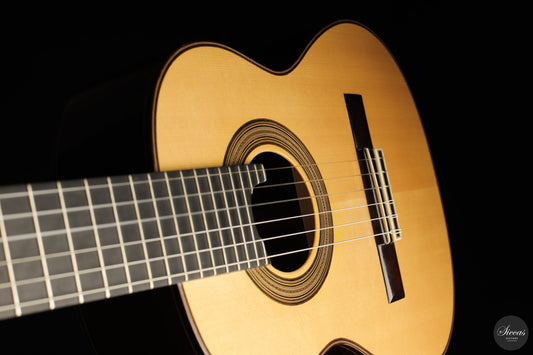
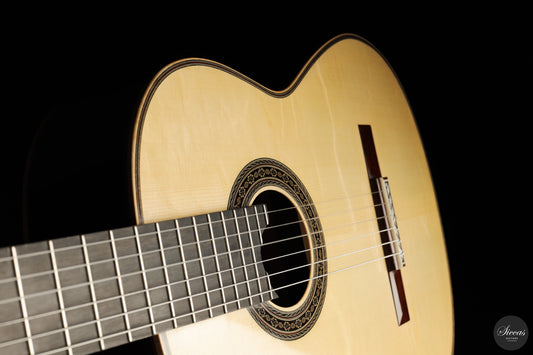
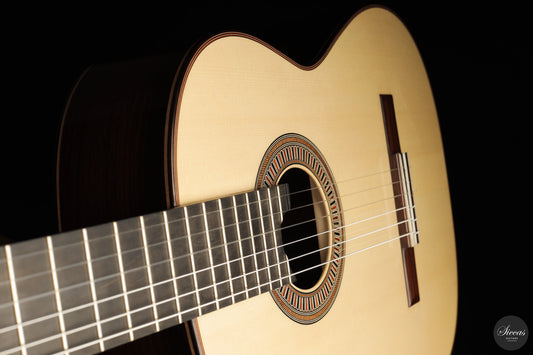
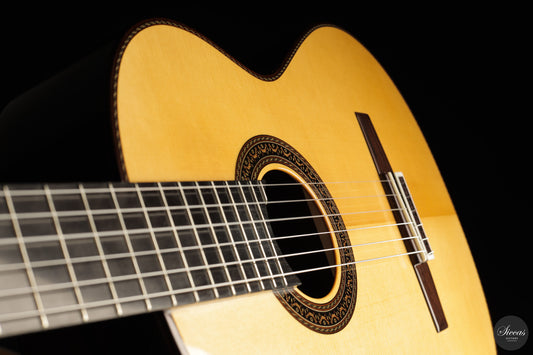
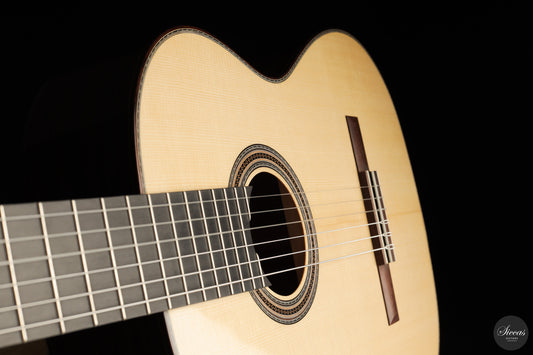
Spruce is the traditional choice of concert performers — bright, projecting, dynamically wide, and built to improve over decades of playing. The finest spruce-top classical guitars in the world use high-altitude European spruce, and the difference is audible from the first note. Every instrument filmed in a professional video review.

-
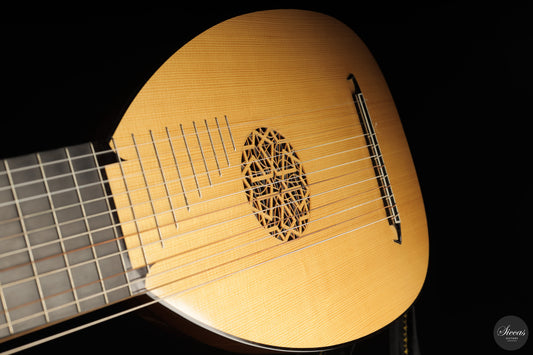
Michael Haaser - 2018 Liuto Forte No. 261
Price: 6.990 €Unit price per Tax free (0% DE)Construction Type: Traditional -
Antonio Marin Montero - 1993 No. 407 Flamenca blanca
Price: 3.990 €Unit price per Tax free (0% DE)ReservedLuthier: Antonio Marin MonteroConstruction Type: FlamencoConstruction Type: Traditional -

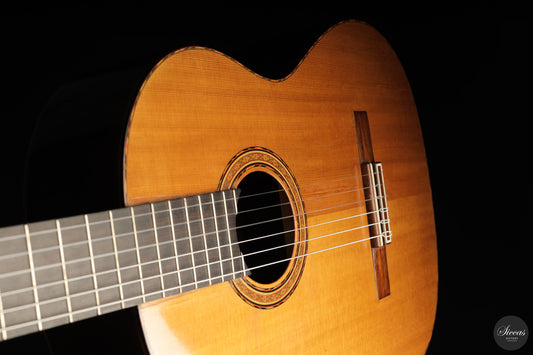 Reserved
César Vera - 1964
Price: 6.990 €Unit price per Tax free (0% DE)ReservedConstruction Type: Traditional -
Martin Bretscher - 2026 Flow-Cut Crossover
Price: 7.490 €Unit price per Tax free (0% DE)ReservedLuthier: Martin Bretscher -

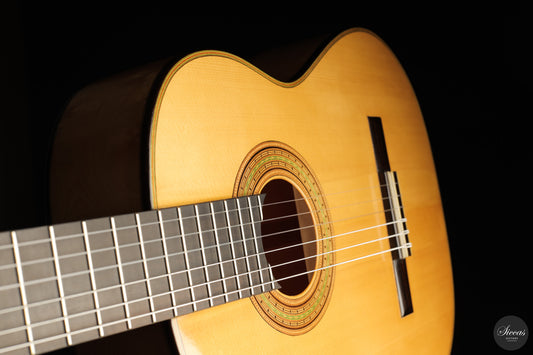 Reserved
Davide Scacchi - 2026
Price: 5.990 €Unit price per Tax free (0% DE)ReservedLuthier: Davide ScacchiConstruction Type: Traditional -
Siccas Luthiers - Halo Traditional Spruce 63 cm
Sale price 1.790 € Price:Unit price per Tax free (0% DE)1.990 €Save: 200 €Pre-OrderManufacturer: Siccas LuthiersManufacturer: Siccas LuthiersConstruction Type: TraditionalConstruction Type: Traditional -
Siccas Luthiers - Halo Traditional Spruce
Sale price 1.790 € Price:Unit price per Tax free (0% DE)1.990 €Save: 200 €Pre-OrderManufacturer: Siccas LuthiersManufacturer: Siccas LuthiersConstruction Type: TraditionalConstruction Type: Traditional -
Fernando Moreno - 2019 "Rastrojo"
Price: 3.490 €Unit price per Tax free (0% DE)Construction Type: Flamenco -

-
Dieter Hense - 1989 "Terz" 82/109 57 cm
Price: 4.190 €Unit price per Tax free (0% DE)Construction Type: Traditional -
Dieter Hense - 1989 "Oktav " 81/109 39 cm
Price: 2.990 €Unit price per Tax free (0% DE)Construction Type: Traditional -
Dragan Neshic - 2026 Especial No. 3
Price: 7.490 €Unit price per Tax free (0% DE)Construction Type: Double-Top Guitars -
Oren Myers - 2026 No. 149
Price: 8.990 €Unit price per Tax free (0% DE)Luthier: Oren MyersConstruction Type: Traditional -
Hans and Alexander Herb - 2003 Concert
Price: 3.990 €Unit price per Tax free (0% DE)Luthier: Hans-Hermann Herb -
Giorgio Amorella - 2026 "La Gentile"
Price: 4.490 €Unit price per Tax free (0% DE)Construction Type: Traditional -
Erez Matzrafi - 2026 "Thucea"
Price: 5.890 €Unit price per Tax free (0% DE)Sold -
Kevin Aram - 2026 Torres "Dua"
Price: 8.990 €Unit price per Tax free (0% DE)Luthier: Kevin AramConstruction Type: Traditional -
Vicente Carrillo - 2026 Gabriela II - Spruce 63 cm
Sale price 5.590 € Price:Unit price per Tax free (0% DE)5.890 €Save: 300 €ReservedLuthier: Vicente CarrilloConstruction Type: Double-Top Guitars -
Gary Southwell - 2008 A-Series No. 242
Price: 8.490 €Unit price per Tax free (0% DE)SoldLuthier: Gary Southwell -
Gary Southwell - 2024 No. 376 64.5 cm
Price: 14.490 €Unit price per Tax free (0% DE)ReservedLuthier: Gary SouthwellConstruction Type: Traditional -

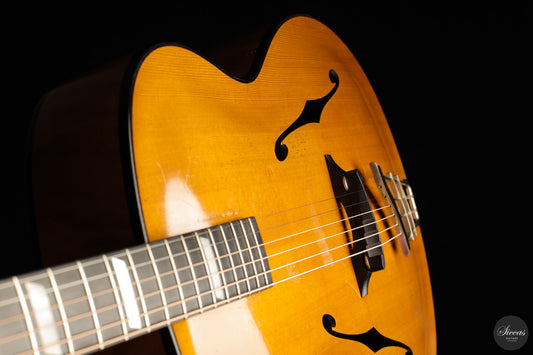 Reserved
Edgar Mönch - 1953 Jazz Guitar
Price: 6.490 €Unit price per Tax free (0% DE)ReservedLuthier: Edgar Mönch


















Ask us - right here.
Enrico, our AI team member, replies around the clock.
Instant reply · free · no obligation Rather use WhatsApp
Frequently Asked Questions About Classical Guitars
How do I choose the right classical guitar for my level?
Choosing the right classical guitar depends on your playing level, musical goals, and budget. Beginners benefit from studio-model guitars from renowned workshops, while advanced players and professionals often choose a handmade master guitar. We are happy to advise you personally and can send detailed sound samples and videos on request.
What is the difference between a master guitar and a studio guitar?
Master guitars are built entirely by hand in the workshop of a single luthier, using only high-quality, well-aged tonewoods. Studio guitars are made in small series, often under the supervision of the master luthier, and offer excellent value for students and ambitious amateur players.
Can I try a classical guitar at home for 14 days?
Yes — every guitar you purchase from us comes with a 14-day home approval period. This complimentary trial applies worldwide to all orders, whether you are in Germany, Europe, the USA, Asia or anywhere else. We ship your instrument fully insured in a high-quality case so you can play it under your own acoustic conditions. If the guitar is not the right one for you, simply send it back and receive a full refund of the purchase price.
Can I try a classical guitar before purchasing?
Absolutely. You are warmly invited to visit our showroom in Karlsruhe, Germany, and test the instruments at your leisure. We are happy to schedule a personal appointment. If a visit is not possible, we send detailed videos and sound samples, and offer extensive consultation by phone or video call.
What payment methods and financing options do you offer?
We accept bank transfer, PayPal, major credit cards, and Klarna. For high-value instruments, we offer individual installment plans on request. Please contact us directly — we will find a suitable solution for every budget.
How do I properly care for my classical guitar?
A classical guitar requires constant humidity between 45 and 55 percent. Store the instrument in its case with a humidifier, avoid direct sunlight and large temperature fluctuations. Change the strings regularly and clean the guitar with a soft microfiber cloth.
You may also be interested Spruce
The spruce top classical guitar is where the instrument's tradition began — and where its greatest concert achievements still live. From the guitars of Torres in 19th-century Andalusia to the Hauser I that Segovia described as the greatest guitar of his epoch, spruce has been the choice of builders who prioritise projection, clarity, and long-term tonal development. If you are looking to buy a spruce top classical guitar, this guide explains exactly what you are getting — and who it suits best.
The Spruce Sound: What to Expect
Spruce produces a fundamentally brighter, more focused sound than cedar. The treble is crystalline and well-separated, the bass is defined and powerful, and the dynamic range — the distance between a pianissimo whisper and a fortissimo projection — is wider than any other soundboard wood. This dynamic responsiveness is precisely why spruce dominates concert performance: in a large hall, the ability to project a pianissimo with clarity is as important as raw volume.
The trade-off: spruce needs time. A new spruce-top guitar often sounds slightly bright or tight until the wood has been played in. This can take months on a good instrument. Once open, a great spruce top sounds richer each decade — many of the most celebrated instruments in the world are 50- or 60-year-old spruce guitars that have transformed over a lifetime of playing.
European Spruce vs. Other Species
Not all spruce is equal. High-altitude European spruce (Picea abies) from the Alps, Carpathians, or Balkans grows slowly enough to produce the narrow, even growth rings that indicate optimal stiffness-to-weight ratio. The result is a top that is stiffer per unit of mass than lower-altitude or North American spruce — producing faster response, more projection, and greater tonal clarity. The finest handmade instruments use carefully selected European spruce; this is a significant part of why they sound the way they do.
Spruce Suits You If…
You play primarily Baroque repertoire (Bach, Dowland) where voice separation and clarity matter most. You perform regularly in larger spaces where projection is paramount. You are investing in an instrument for the long term and want something that will reward years of playing. You have developed technique and playing force — spruce responds most dramatically to a player who can push it dynamically. You want the traditional concert sound that has defined the classical guitar for 150 years.
The Instruments in This Collection
Our spruce collection includes instruments across the full range — from accessible studio-quality guitars with excellent European spruce tops to rare handmade pieces from celebrated luthiers. Every instrument is filmed so you can hear the projection, the treble separation, and the dynamic response before purchasing. We specifically note the spruce origin (European, Engelmann, or Sitka) where known, because it matters.
Frequently Asked Questions
Is spruce better than cedar for classical guitar?
Neither is better — they suit different players and contexts. Spruce: projection, clarity, long-term development, Baroque repertoire. Cedar: warmth, immediate response, Romantic repertoire, intimate settings. The full comparison: Spruce vs. Cedar.
How long does a spruce top take to open up?
Typically 6–18 months of regular playing for a noticeable opening up, with continued improvement over years. The timeline depends on wood quality, construction, and how much the guitar is played. A top-quality European spruce guitar played daily will open meaningfully in 6 months; a lower-density top may take longer.
What spruce guitars did Segovia play?
Andrés Segovia's most famous instrument was the Hermann Hauser I guitar of 1937 — a European spruce top with Brazilian rosewood back and sides. He described it as the greatest guitar of his epoch. His earlier instruments, including the Manuel Ramírez guitar built in the Santos Hernández workshop in 1912, also used spruce.
Browse Spruce Top Guitars
Every instrument filmed, every purchase with a 14-day home trial and worldwide insured shipping. Browse our full selection of spruce top classical guitars or speak to our team.