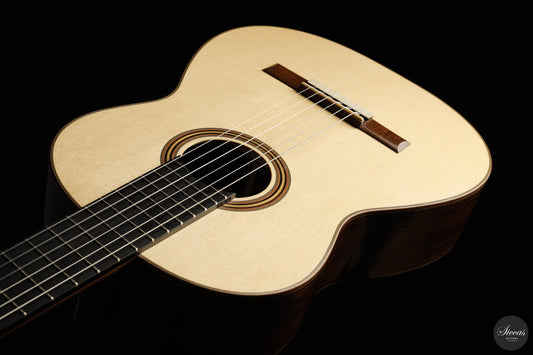
Choosing a classical guitar can feel overwhelming. The prices range from modest to astronomical, the specifications are full of unfamiliar terms, and everyone seems to have an opinion. But the process becomes much simpler once you break it into the handful of decisions that really matter. This is our complete guide to choosing the right classical guitar — whatever your level and budget.
1. Start with your level and budget
Be honest about where you are. A beginner does not need — and usually cannot yet hear the benefit of — a master instrument, while a serious player will quickly outgrow the cheapest models. Set a realistic budget for your stage, and aim to buy the best-playing guitar within it. (Our price guide explains what each tier buys, and our beginner guide covers first instruments in detail.)
2. Get the size and scale right
Comfort comes first, because an uncomfortable guitar holds back your technique. Children need fractional sizes (1/2, 3/4); most adults take a full size. If you have smaller hands or struggle with stretches, consider a shorter scale length (640 mm or less), which eases both reach and string tension.
3. Choose the top wood: cedar or spruce
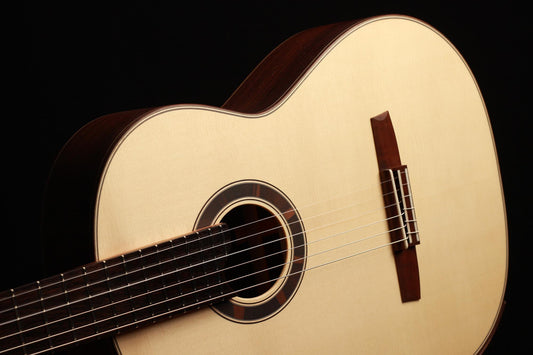
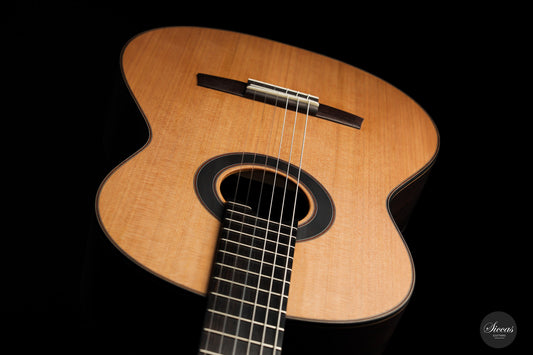
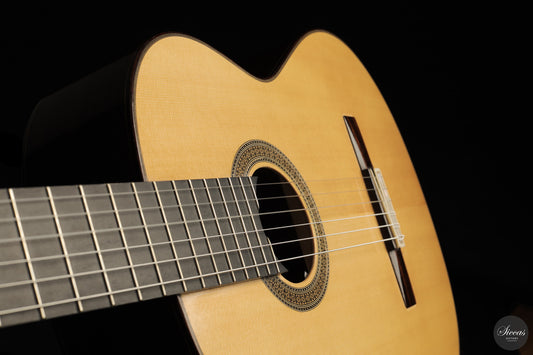
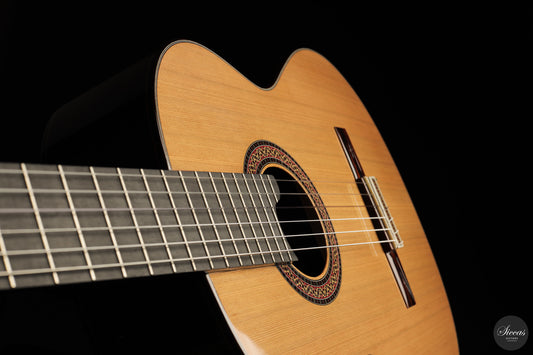
The soundboard shapes the guitar's voice more than anything else. In broad terms, cedar sounds warm and immediate, while spruce sounds bright, clear and powerful and is often felt to improve more with age. Neither is "better" — it is a matter of taste and repertoire.
4. Understand the construction
Look at how the guitar is built. A solid top generally sounds better than a laminate and is worth prioritising. Beyond that, traditional fan bracing, modern lattice and double-top constructions each give a different balance of warmth and power — our guide to bracing types explains the differences. Consider, too, whether you want a studio or a master guitar for your level.
5. Insist on a good setup and playability
This is the single most underrated factor. The action (string height), the neck, the intonation and the general setup affect how a guitar plays far more than its price tag. A modest, well-set-up guitar can outplay an expensive, poorly adjusted one. Always check that the guitar plays easily and in tune up the whole neck.
6. Always try before you buy — and trust your ears
Specifications only tell you so much; in the end, you are choosing a sound and a feel. Play the guitar yourself if you possibly can, across all registers and dynamics, and listen for a tone that moves you and a neck that lets your hand relax. Two guitars with identical specs can be quite different instruments. If you cannot play it in person, buy from a trusted dealer who sets the guitar up, describes it honestly and stands behind it.
7. Don't forget the extras
A proper setup, good strings suited to your guitar, a hard case and a humidifier are small costs that protect and improve any instrument — see our guide to care and humidity. Budgeting a little for these from the start saves trouble later.
FAQ
What's the most important thing when choosing a classical guitar?
Playability and a sound you love — above all a good setup and a comfortable size and scale for your hands.
Cedar or spruce — which should I pick?
Cedar for warm, immediate tone; spruce for bright, clear, powerful tone that often matures with age. It's a matter of taste.
Do I really need to try it first?
Ideally yes — or buy from a trusted dealer who sets it up and stands behind it, since two guitars with the same specs can sound quite different.