
The guitar has long been one of the most popular musical instruments in the world. Whether acoustic or electric, quiet or loud, at home or on stage — it can be played as a solo or accompanying instrument and offers remarkable versatility. There is hardly a musical style that cannot be performed on the guitar, which is why there is a wide selection of suitable instruments available in every price category.
The Three Main Types of Guitar
A fundamental distinction exists between the classical guitar, the acoustic guitar, and the electric guitar. Each of these instrument types has its own character, its own sound, and its own repertoire — understanding the differences is the first step toward finding the right instrument for your musical goals.
The Classical Guitar
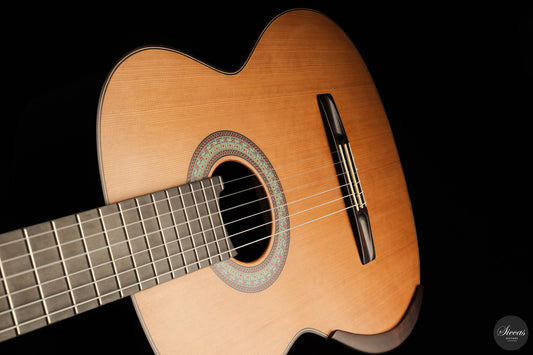
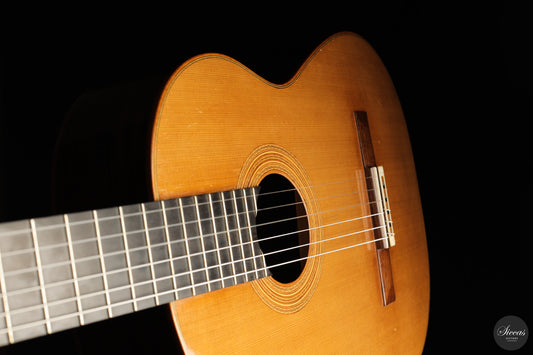
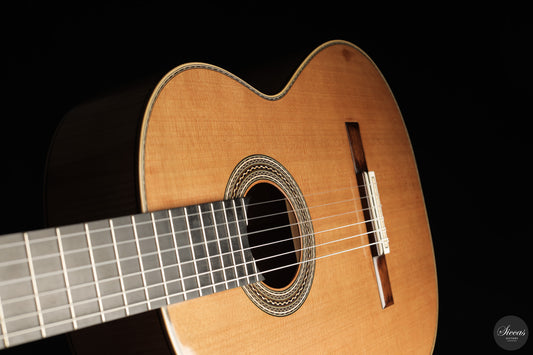
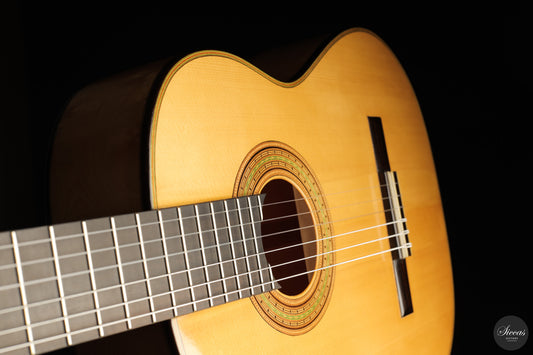
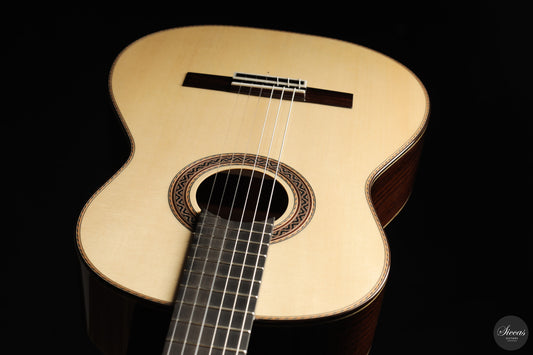
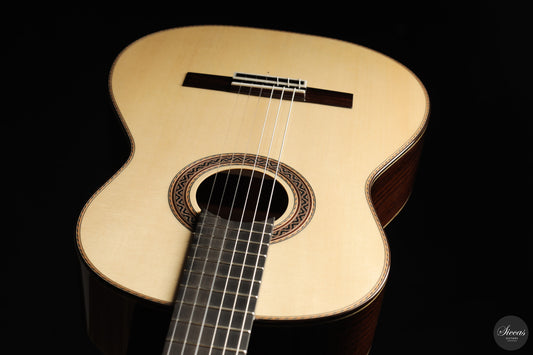
The classical guitar — also called the nylon-string guitar or concert guitar — is the oldest and most refined of the three types. Its roots trace back to the lutes and vihuela of Renaissance Spain, and over centuries it evolved into the instrument we know today: six strings made of nylon or gut, a wide, flat fingerboard, and a warm, resonant tone that is immediately recognisable.
The advantage of a classical guitar with soft nylon strings is that the fingers experience far less pressure compared to steel-string guitars. The wider fingerboard also helps beginners avoid accidentally muting adjacent strings. The classical guitar sound is soft, clear, and singing — especially comfortable for new players. This is why many people begin their musical journey with a classical guitar.
The classical guitar is the instrument of an extraordinarily rich repertoire. From the Renaissance lute transcriptions of Andrés Segovia to the music of Johann Sebastian Bach, from the works of Francisco Tárrega to the compositions of Agustín Barrios Mangoré — the concert guitar has an unbroken lineage of masterworks that spans hundreds of years.
The Acoustic Guitar
The acoustic guitar uses steel strings and produces a brighter, louder, and more cutting sound than a classical guitar. It is the instrument of folk, country, blues, and singer-songwriter traditions. Because the strings sit under higher tension, the fingerboard is narrower and slightly curved, which many players find easier for chord shapes. Acoustic guitars can be played with the fingers or with a pick.
At Siccas Guitars, players will find a wide range of both classical concert guitars and modern acoustic guitars with steel strings. Explore our full selection in the classical guitars collection.
The Electric Guitar
The electric guitar uses magnetic pickups to convert string vibration into an electrical signal, which is then amplified and shaped by an amplifier. It is the central instrument of rock, metal, jazz, and blues. Its tone is infinitely variable and has defined the sound of popular music for decades.
Choosing the Right Guitar
This is not simply a question of preference — it is a question of purpose. If someone wants to play blues or folk on a steel-string acoustic, or rock or metal on an electric guitar, a classical guitar will not provide the desired sound. Practising on an instrument that does not match your musical goals can lead to frustration and a loss of motivation. That is why it is important to consider what kind of music you want to play in the long term.
With regular practice, the fingers adjust quickly to steel strings, so once your preferred musical direction is clear, choosing the right guitar becomes straightforward. If you are unsure, classical guitar is often the most forgiving starting point — and it opens the door to one of the world's deepest musical traditions. Read more in our guide: Acoustic vs Classical Guitar — Key Differences.
The Classical Guitar in Depth
For those drawn to the concert guitar, the world of lutherie — guitar making — is an endlessly fascinating subject. The materials, construction methods, and the hands of individual makers all shape the sound of the instrument in profound ways.
Tonewoods: Spruce and Cedar
The two most common tonewoods for classical guitar soundboards are spruce and cedar. Spruce produces a bright, projecting, and articulate tone that rewards precise right-hand technique and tends to open up over years of playing. Cedar is warmer and more immediate — it responds quickly and suits players who prefer a darker, rounder sound. Our in-depth comparison: Spruce vs Cedar — Classical Guitar Tone Comparison.
You can also browse our curated collections by tonewood: spruce-top classical guitars and cedar-top classical guitars.
Double-Top and Modern Construction
Modern luthiers continue to push the boundaries of classical guitar construction. Double-top guitars — built with a sandwich soundboard of two thin wood layers around a Nomex honeycomb core — offer exceptional projection and responsiveness at reduced weight. Explore our double-top guitar collection.
Flamenco Guitar
The flamenco guitar is the classical guitar's close relative, built lighter and shallower for a percussive, immediate attack. Where the concert guitar sings, the flamenco guitar snaps and cuts. Browse our flamenco guitar collection.
The Repertoire of the Classical Guitar
The classical guitar repertoire is one of the richest in all of chamber music. Famous classical guitar pieces range from the intimate miniatures of Tárrega — including Recuerdos de la Alhambra and Capricho Árabe — to the grand, multi-movement works of Heitor Villa-Lobos and Agustín Barrios. For those beginning their journey, our guide to the 10 easiest classical guitar pieces for beginners is an ideal starting point.
Learning the Classical Guitar
How long does it take to learn classical guitar? The honest answer is: it depends on your goals. A handful of beautiful pieces can be within reach in a year of dedicated practice. True mastery is a lifelong pursuit. Our article How Long to Learn Classical Guitar explores this question in detail.
One of the first practical steps is tuning — and doing it correctly matters enormously for ear training and musical development. Our guide How to Tune a Classical Guitar covers everything you need to know.
Great Classical Guitarists
The history of the classical guitar is inseparable from the great players who shaped it. Andrés Segovia established the guitar as a serious concert instrument in the twentieth century. Julian Bream expanded the repertoire enormously through commissions and advocacy. David Russell is celebrated for his tone and poetic musicianship. Ana Vidovic brings a powerful combination of technical precision and emotional depth. Discover more at our great classical guitarists overview.
Siccas Guitars — Expert Guidance and Premium Instruments
Whether you are learning as a beginner or searching for a refined master instrument, Siccas Guitars offers professional guidance in selecting the right guitar. The shop presents a broad range of high-end instruments by renowned makers — from beginner-friendly guitars to handmade master instruments and rare collector's pieces. Historic makers such as Hermann Hauser I, Daniel Friederich, and José Ramírez are represented alongside contemporary luthiers from around the world.
Quality Check Before Shipping
All guitars at Siccas Guitars undergo a detailed inspection and adjustment by the expert team to ensure that each instrument arrives in perfect playing condition. Customers may also request individual adjustments by the in-house guitar maker.
Due to global demand for high-quality instruments, most guitars are sold worldwide through the website. Unlike many other dealers, Siccas Guitars focuses on rare and premium instruments — presented through carefully produced videos on YouTube and on the website, featuring leading musicians such as Ana Vidovic, David Russell, and Marcin Dylla.
Siccas Guitars specialises in master guitars, acoustic guitars, and historical instruments from around the world. The shop also provides a wide selection of concert and student guitars to support young talent and hobby musicians at every stage of their journey.